The right extinguisher depends on what is burning. Using the wrong type can spread a fire or create a new hazard, so match the extinguisher to the fire class and the room.
Fire classes in simple words
- Class A: ordinary solids such as wood, paper and cloth.
- Class B: flammable liquids such as petrol, oil and paint.
- Class C: flammable gases.
- Class D: combustible metals.
- Electrical fires: equipment that is energised. Use an extinguisher marked as suitable for electrical use, and disconnect power when it is safe to do so.
- Kitchen fires: cooking oils and fats, which need a type rated for that purpose.
Class labels differ slightly between standards, so read the label on the extinguisher itself.
Common extinguisher types
- Water: for ordinary solids. Not for electrical, oil or fat fires.
- Foam: for solids and flammable liquids.
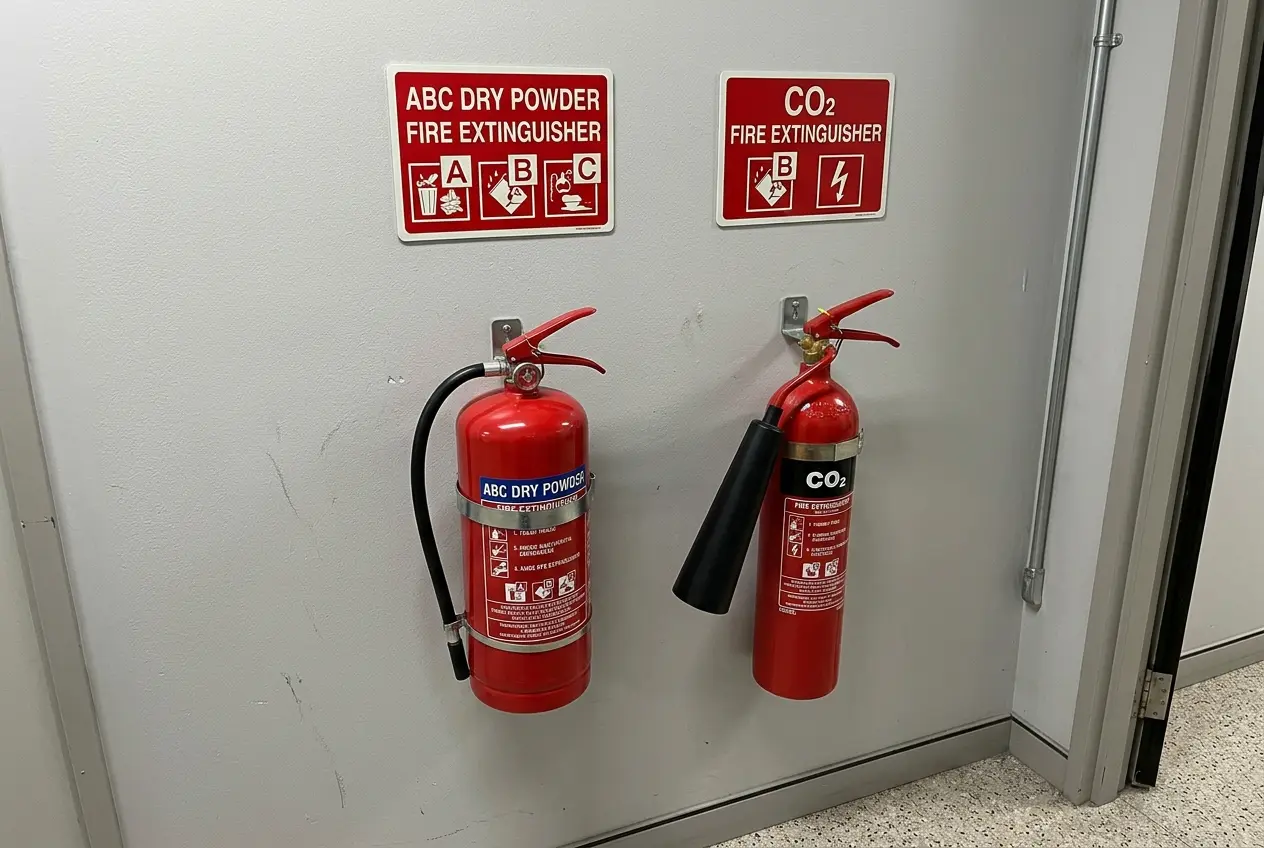
- Dry powder (ABC): versatile, used in many offices, shops and vehicles. It leaves residue that can damage equipment.
- CO2: clean discharge, often used near electrical equipment and server rooms.
- Wet chemical: for cooking oil and fat fires in kitchens.
Matching the type to the room
An office usually needs water or foam plus CO2 near electrical panels. A kitchen needs wet chemical. A workshop with oil may need foam or powder. A server room often uses CO2 or a clean-agent extinguisher. A risk assessment decides the final selection and the number of units.
Keep them working
Fit them where people can reach them, keep a register, check the pressure gauge and seal regularly, and arrange periodic servicing and refilling. Our guide on building an extinguisher register shows what to record.
Questions to ask before you decide
- What materials and equipment are in this room?
- Is the extinguisher label suitable for electrical use where needed?
- Where is each unit mounted, and is it visible and reachable?
- When was each unit last inspected?
Our team can help with this. See our fire extinguisher supply and servicing, or send us your requirement.
Planning something similar?
Tell us about your building and what you need. We reply within 24 hours.
This is a planning overview. A qualified professional must determine site-specific design and requirements.