Two fire alarm quotations for the same building can differ widely, and the cheaper one is not always the smaller job. The price follows the scope, the equipment class and the amount of testing, so the first step is to make the quotations comparable.
The factors that move the price
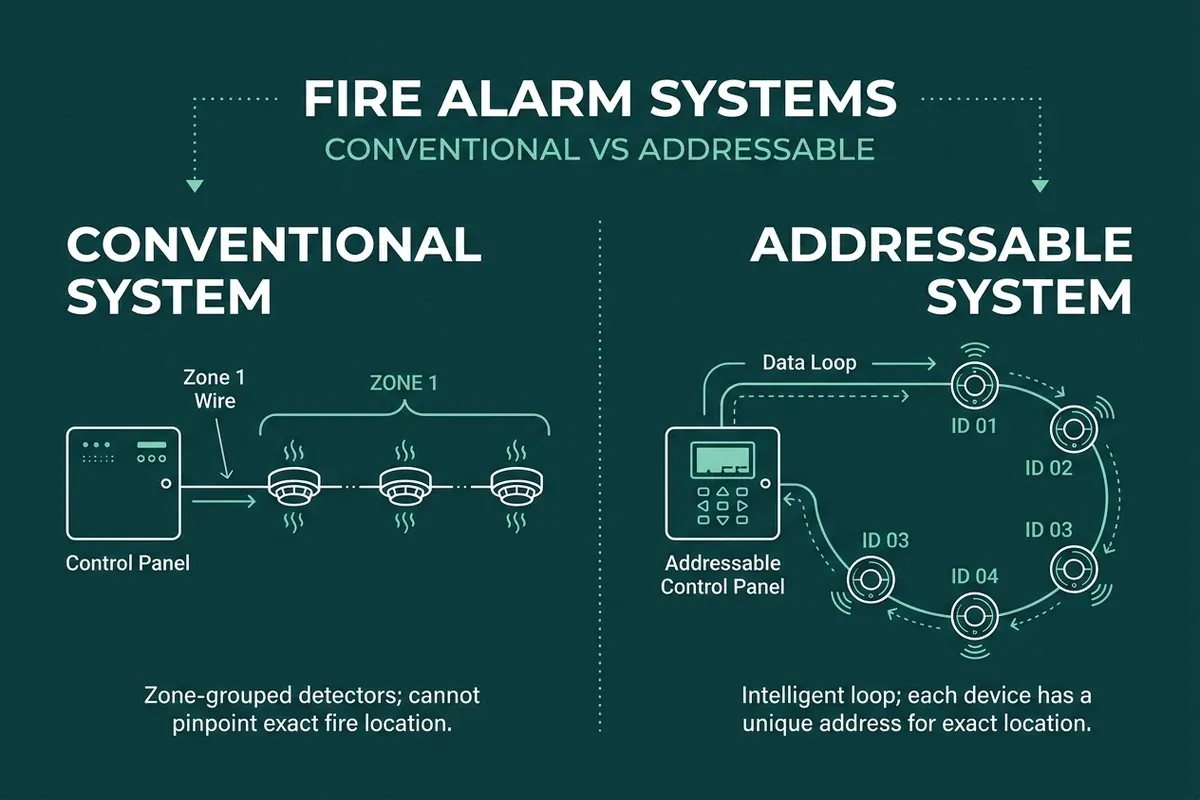
- Panel type. A conventional panel groups detectors into zones. An addressable panel identifies each device, which costs more but shortens fault-finding and gives exact alarm locations.
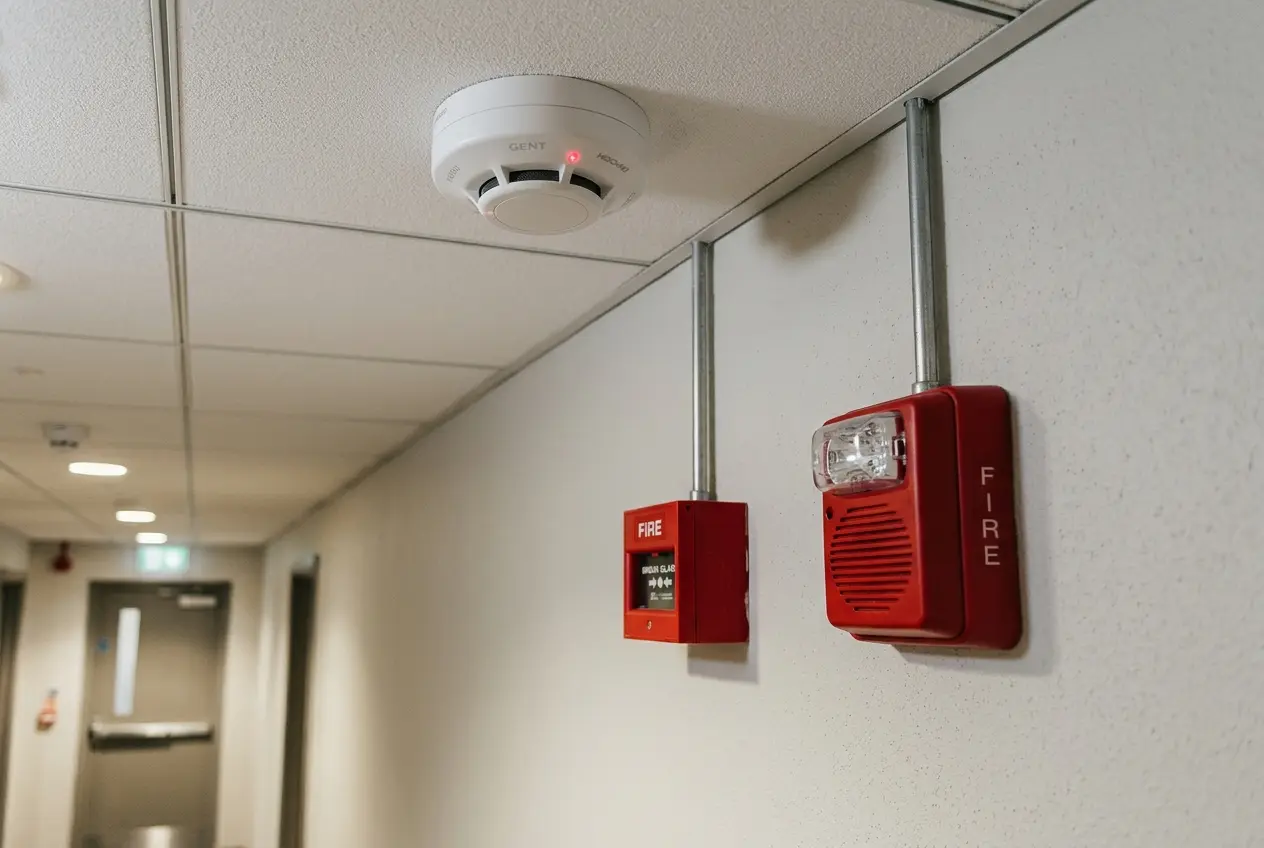
- Number and type of devices. Smoke, heat, multi-sensor and beam detectors, manual call points, sounders and strobes are priced differently, and the counts come from the design, not from floor area alone.
- Cabling and containment. Fire-rated cable, conduit or trunking, and the difficulty of the routes (ceiling voids, shafts, existing buildings) change labour and material.
- Integration. Links to lift recall, door release, HVAC shutdown, pump controllers or a building management system add interface modules and programming.
- Power and standby. Battery capacity and any extra power supplies depend on the design load.
- Documentation and testing. Drawings, cause-and-effect matrix, commissioning, training and handover records are work that a very low price may leave out.
Why the lowest quotation can cost more later
If a quotation leaves out cable, programming, testing or the approved drawing, those items return as variations during the project. Ask each supplier to price the same list: same device schedule, same panel class, same documentation. A written list of exclusions is as important as the price itself.
How to get a fair comparison
- Share the architectural drawings and the intended use of each area.
- Ask for the design basis (which code or standard the layout follows).
- Request an itemized bill: panel, devices, cable, labour, testing, training.
- Confirm the make and model of the panel and whether spare parts and software are locally supported.
- Check the warranty period and who responds to faults after handover.
Questions to ask before you decide
- Is the system conventional or addressable, and why?
- Does the price include cable, containment and programming?
- Which standard does the design follow?
- What testing and handover records will we receive?
- Who services the system after the warranty ends?
Our team can help with this. See our fire detection and alarm design and installation, or send us your requirement.
Planning something similar?
Tell us about your building and what you need. We reply within 24 hours.
This is a planning overview. A qualified professional must determine site-specific design and requirements.