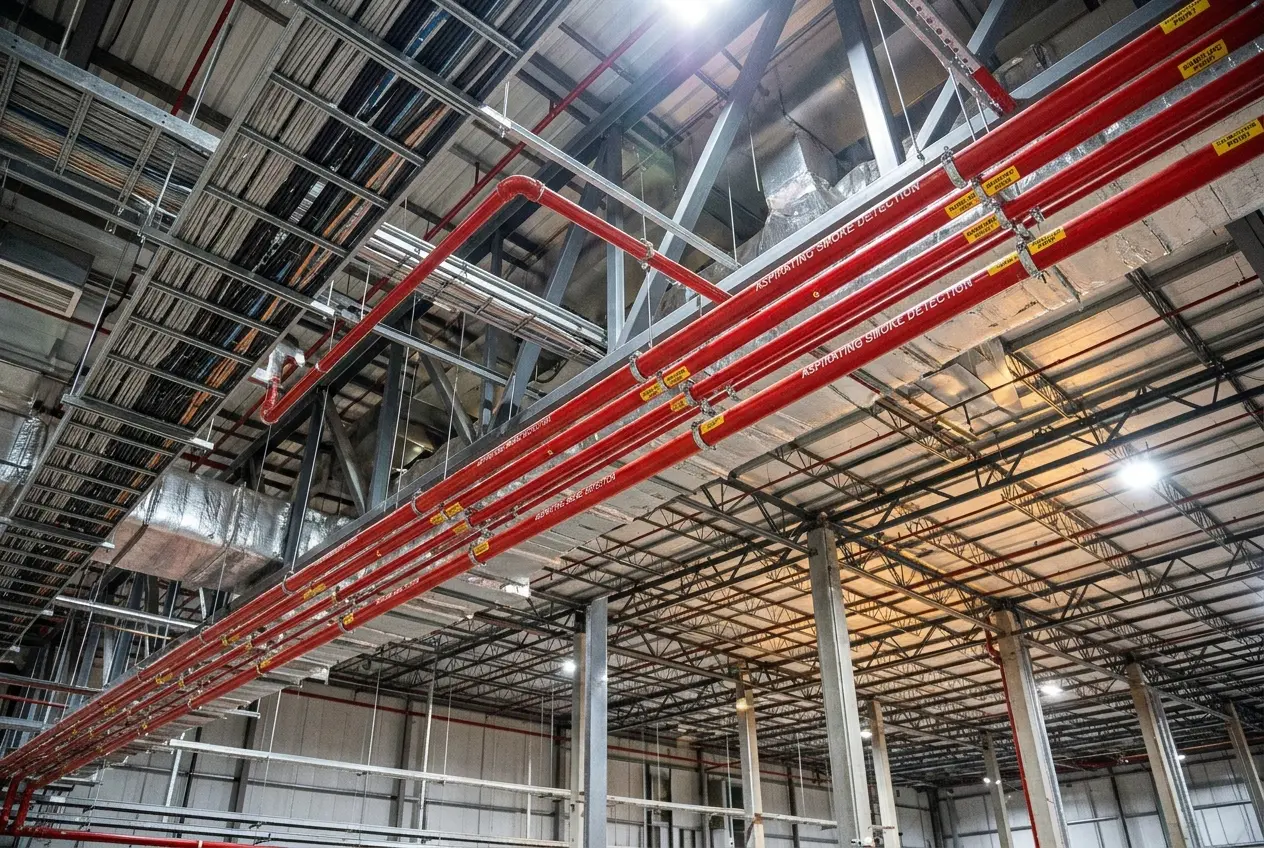
A normal smoke detector waits for smoke to reach it. An aspirating system pulls air through small pipes to a central unit that analyses it, and it can sense smoke at a much lower level.
How it works
A network of sampling pipes with small holes runs across the protected area. A fan draws air to a highly sensitive detector. The unit can raise early warning, action and alarm levels, so staff can respond before a fire grows.
Where it makes sense
- Data centres and server rooms
- Clean rooms and laboratories
- High ceilings, warehouses and atriums where smoke dilutes or rises slowly
- Spaces where detectors are hard to reach, or where appearance matters
- Cold stores and dusty environments, with suitable filters
Points to check
- Pipe layout and hole sizes must follow the product manufacturer’s design calculation.
- Airflow in the room can affect results, so design for it.
- The unit must connect to the fire alarm panel and any suppression system.
- Regular maintenance and filter changes keep it reliable.
Is it worth the cost?
It costs more than point detectors, so use it where early warning protects high-value or critical assets. For ordinary offices and shops, standard detectors are usually enough. See also our server room fire protection guide.
Questions to ask before you decide
- What asset needs this level of early warning?
- Who designs the pipe network and checks airflow?
- How does the unit connect to the main panel?
- Who will maintain filters and test the system?
Our team can help with this. See our aspirating smoke detection design and installation, or send us your requirement.
Planning something similar?
Tell us about your building and what you need. We reply within 24 hours.
This is a planning overview. A qualified professional must determine site-specific design and requirements.