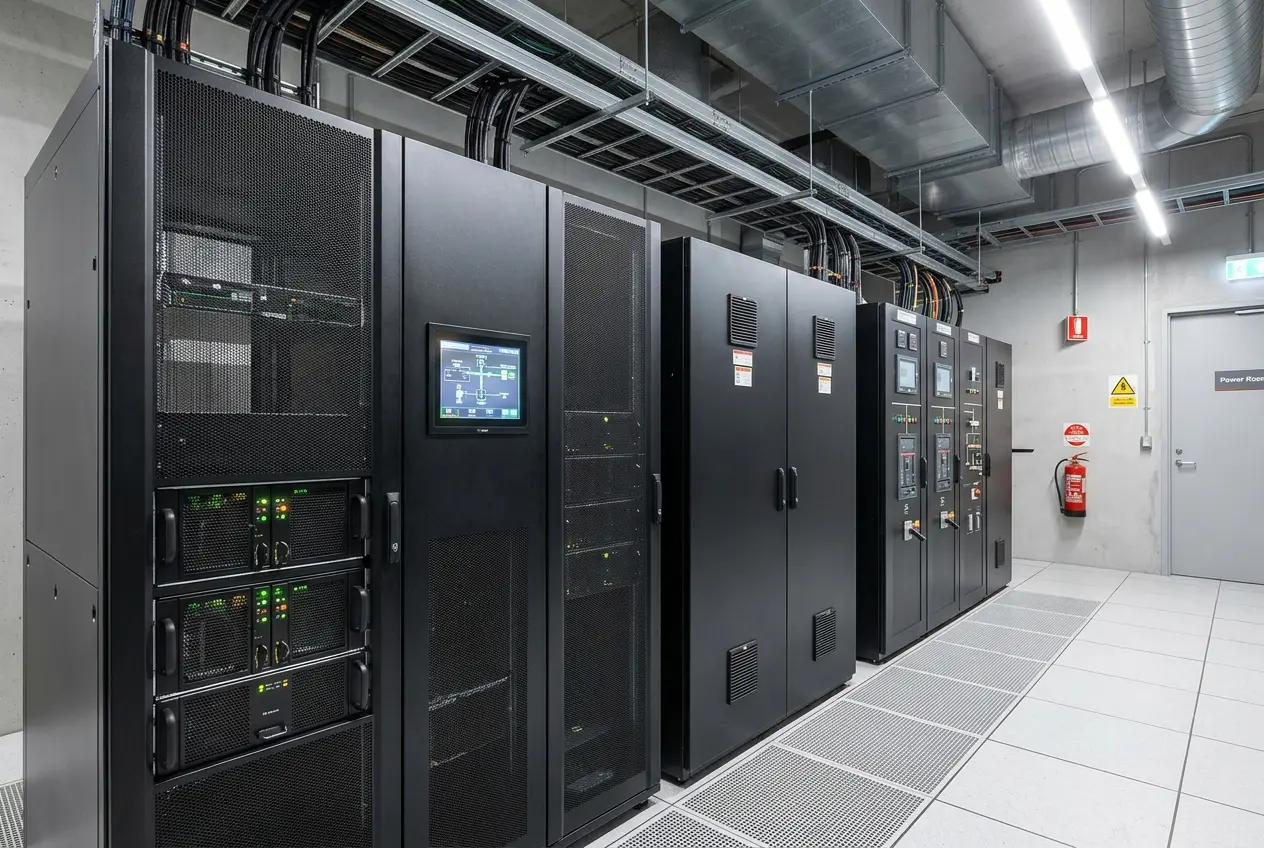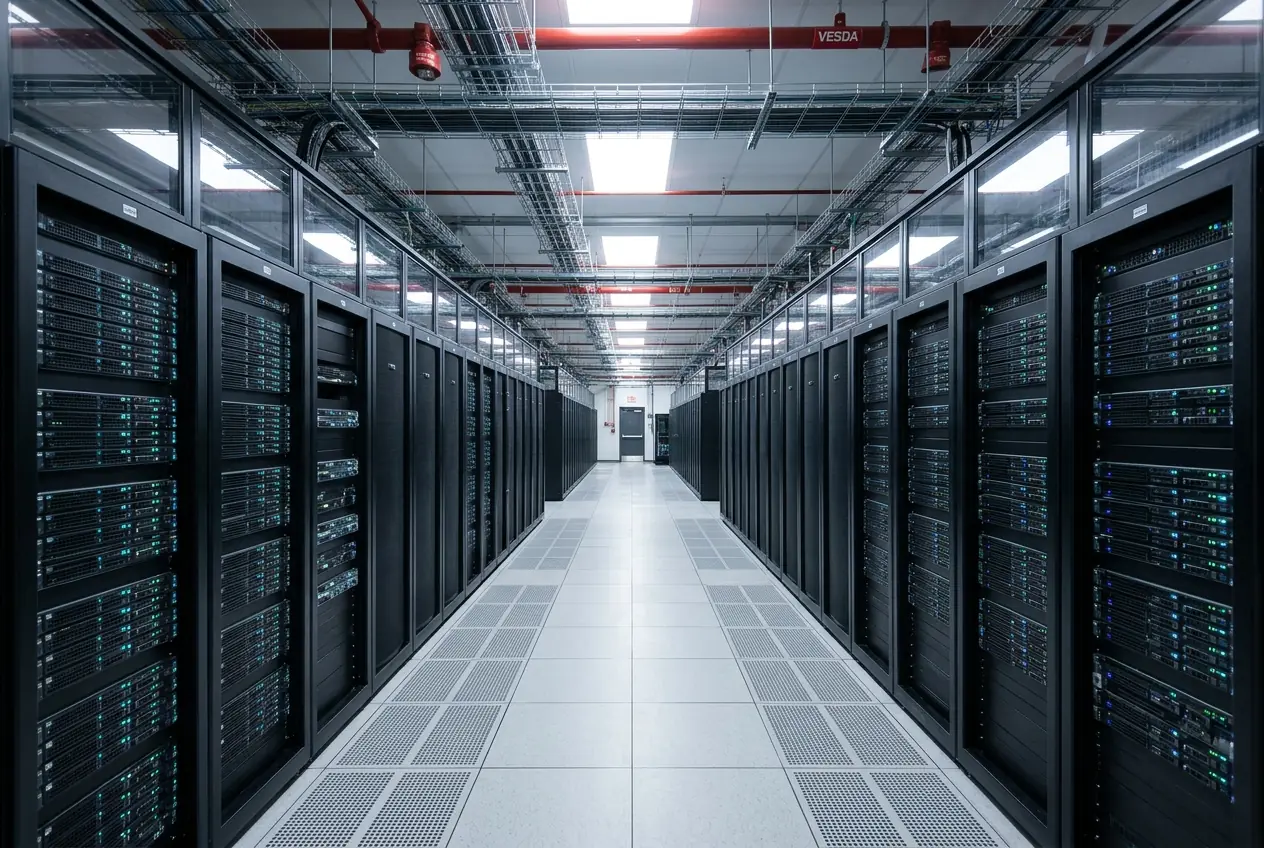
A server room concentrates equipment, cabling and power in a small space. A fire there can stop a whole business, so protection should start with early detection, not only with a way to put the fire out.
Detect early
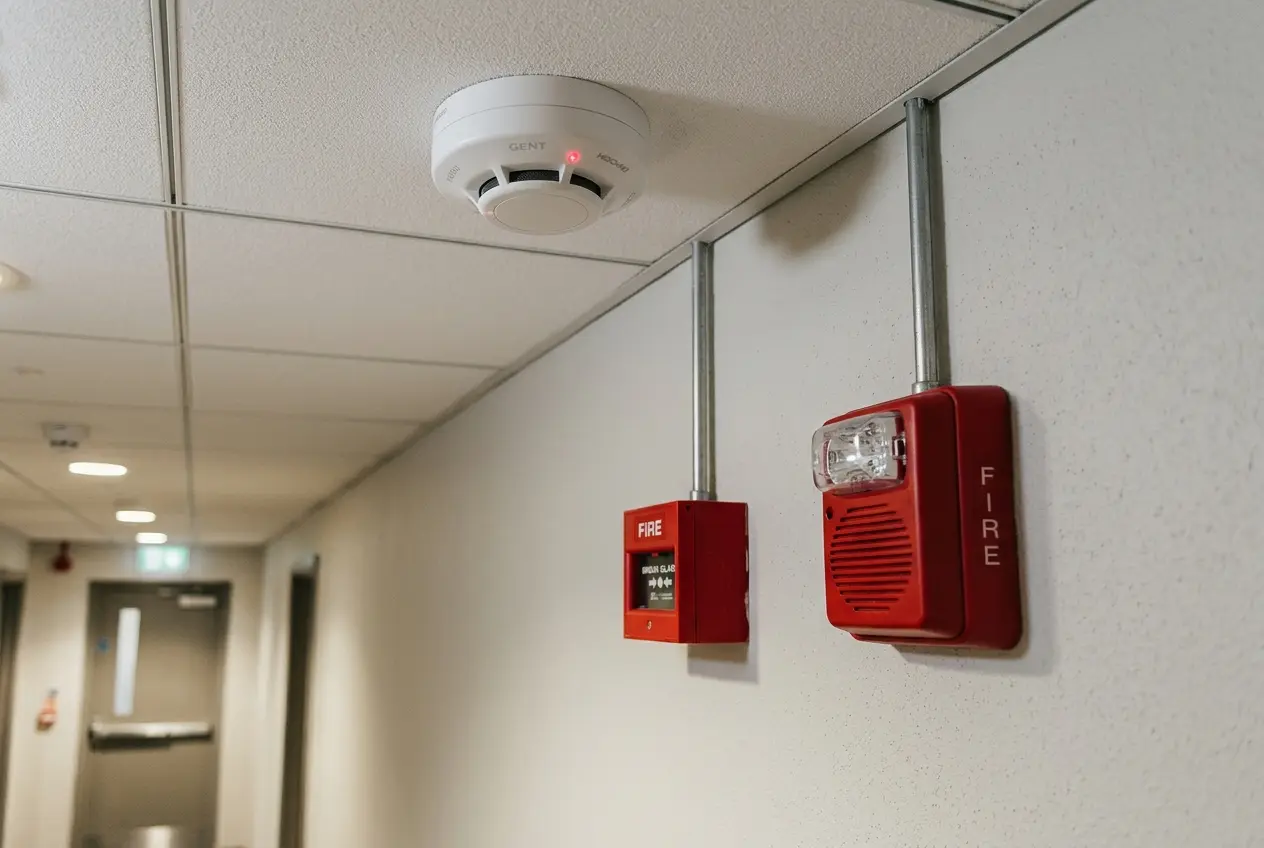
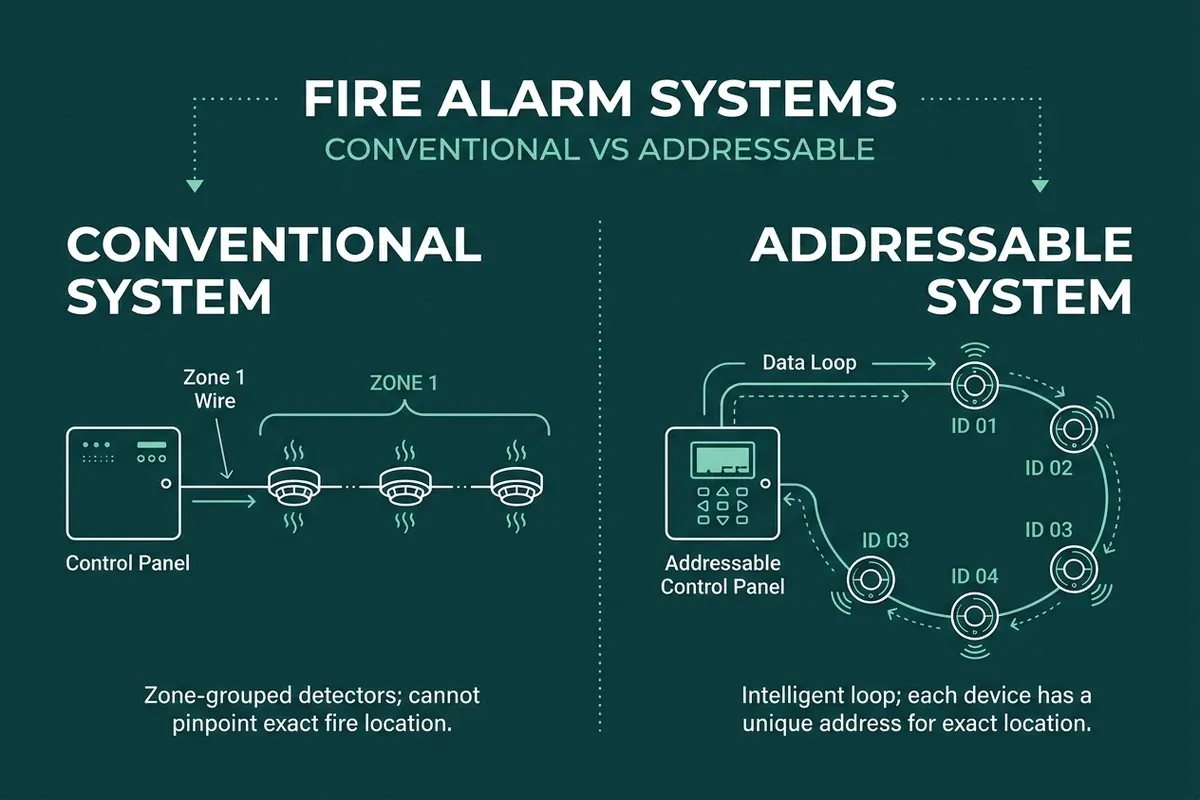
Smoke from overheated cable or equipment appears long before flames. Very early detection, such as an aspirating smoke detection system, can raise an alarm while there is still time to act. A standard point detector is better than nothing, but it reacts later. See our note on aspirating smoke detection.
Choose a suitable suppression method
Water-based sprinklers can damage equipment, so many server rooms use a clean-agent gas system. It needs a sealed room, a discharge delay, and clear warning signs and alarms. Portable CO2 or clean-agent extinguishers support the fixed system for small incidents.
Control the causes
- Keep combustible material, such as cardboard and packaging, out of the room.
- Keep cables tidy and use suitable cable types and fire stopping at penetrations.
- Maintain power and cooling equipment and check connections regularly.
- Make sure the emergency power-off arrangement is clear and protected from accidental use.
Plan the response
Write a short procedure: who responds to an alarm, when to use the extinguisher, and when to leave. Test the alarm and the suppression system on schedule, and keep the records. Our data centre planning guide covers the wider design.
Questions to ask before you decide
- Is there very early smoke detection in the room?
- Is the room sealed and suitable for a gas system?
- Who is trained to respond?
- When was the last full test?
Our team can help with this. See our fire suppression design, or send us your requirement.
Planning something similar?
Tell us about your building and what you need. We reply within 24 hours.
This is a planning overview. A qualified professional must determine site-specific design and requirements.