Most attacks on small businesses are not clever. They use weak passwords, old software and phishing emails. A few basic habits remove a large share of the risk.
The basics
- Strong, unique passwords and a password manager.
- Two-step login on email, banking and cloud accounts.
- Updates: keep operating systems, browsers and apps current.
- Backups: keep copies of important data, including one offline or in a separate location, and test restoring them.
- Antivirus or endpoint protection on all computers.
Network and devices
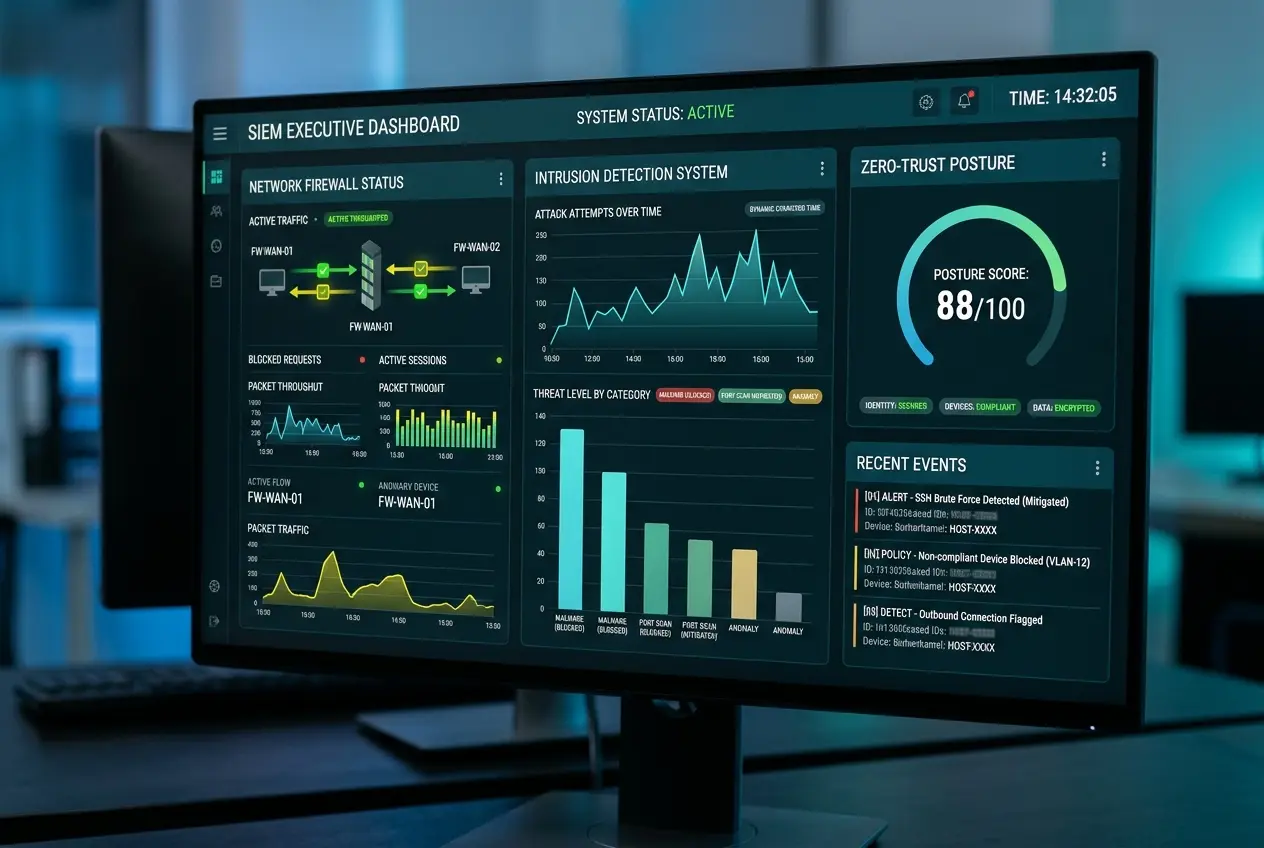
- Use a firewall and change default router and camera passwords.
- Separate guest Wi-Fi from the office network.
- Remove access for people who leave the company.
- Limit admin rights to those who need them.
People
Teach staff to spot suspicious emails and links, to verify payment requests by phone, and to report mistakes quickly. A short, regular session works better than a long one-time talk.
Prepare for an incident
Write down who to call, how to disconnect an infected machine, and where backups are. A simple plan makes a bad day shorter. For a full review, see our cybersecurity service.
Questions to ask before you decide
- Is two-step login turned on for email and banking?
- When did we last test a backup restore?
- Who has admin access?
- What is the plan if a computer is infected?
Our team can help with this. See our cybersecurity services, or send us your requirement.
Planning something similar?
Tell us about your building and what you need. We reply within 24 hours.
This is a planning overview. A qualified professional must determine site-specific design and requirements.