Bangladesh has a high lightning risk during the pre-monsoon and monsoon seasons. Protecting a building takes more than a rod on the roof. The parts must work as one system.
The main parts
- Air termination: rods, mesh or conductors on the roof that receive the strike.
- Down conductors: routes that carry the current from the roof towards the ground.
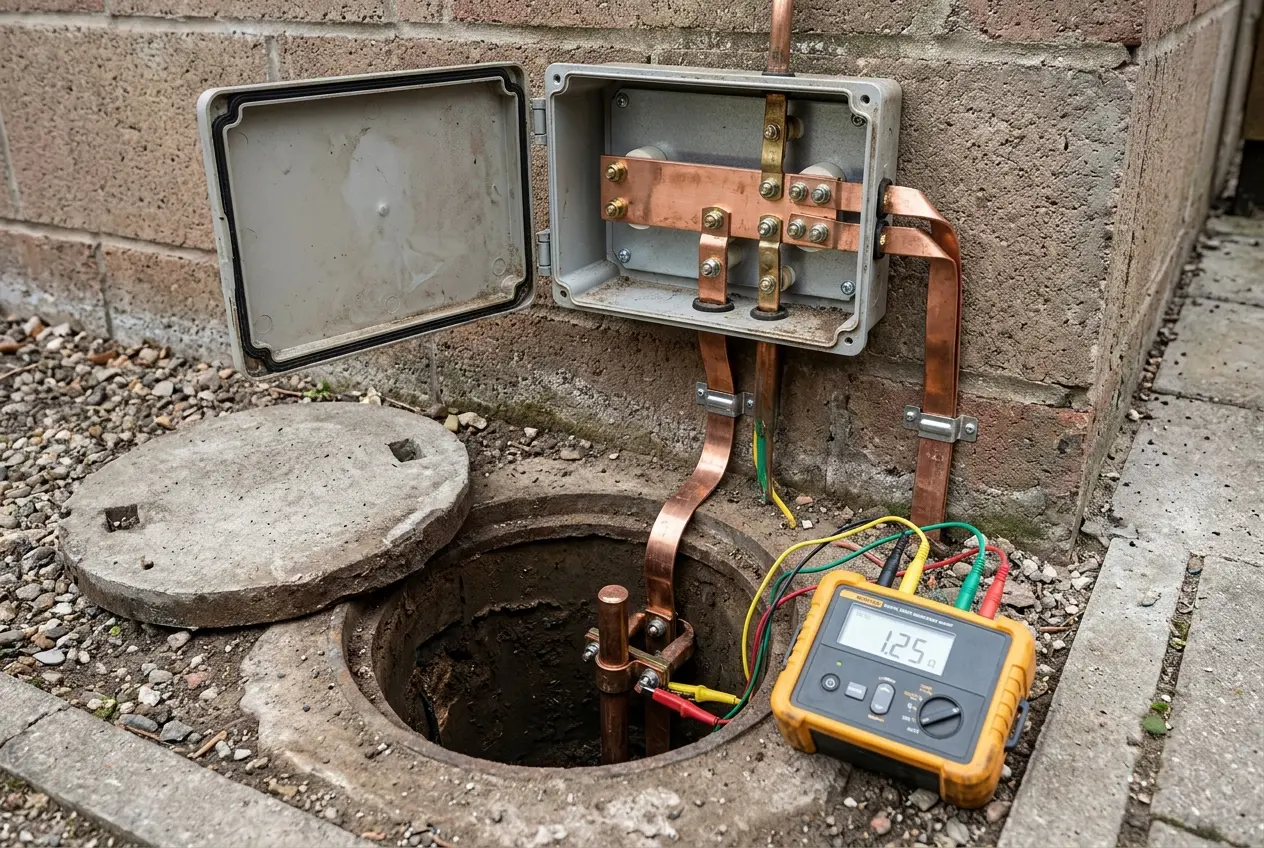
- Earthing: an earth termination system that spreads the current into the ground with low resistance.
- Bonding: connecting metal parts so dangerous voltage differences do not appear inside the building.
- Surge protection: devices at the electrical and data entry points that protect equipment from induced surges.
Why surge protection matters
Even without a direct strike, a nearby strike can send a surge through power and data cables and damage electronics. Surge protection devices at the main panel and at sensitive equipment reduce this damage.
How the design is decided
A risk assessment considers the building size, height, use and location, and sets the protection level. Common reference standards include the IEC 62305 series. Tall buildings, factories, hospitals, data centres and storage areas need particular attention.
Keep it working
Earth resistance can change with soil and corrosion. Inspect connections, test earth resistance at planned intervals and after any strike, and keep the records. Our electrical safety audit checklist can include these checks.
Questions to ask before you decide
- Was a lightning risk assessment done?
- What earth resistance was measured at commissioning?
- Is surge protection fitted at the main panel and key equipment?
- When is the next inspection?
Our team can help with this. See our lightning protection design and installation, or send us your requirement.
Planning something similar?
Tell us about your building and what you need. We reply within 24 hours.
This is a planning overview. A qualified professional must determine site-specific design and requirements.